Today we are going to talk about a loader tyre, also known as OTR (Off-The-Road) tires. These are tools designed for heavy machinery and are super strong because they are used in construction, mining, and others. Also, with these tires, you can face rough terrains, heavy loads, and demanding conditions. You will have more stability, traction, and durability. Now, have you ever wondered about a Loader tyre design? 

How is a Loader Tyre Designed?  

To be able to handle extreme loads and harsh environments, these tires are engineered to be tough and sturdy. In addition, they have amazing characteristics as: 

  • Reinforced sidewalls, 
  • Sturdy casing 
  • Thick tread layers 

This allows your loader tyre to be resilient and have the power to be resistant. Besides, they won’t break easily, have punctures or fall apart. 

Loader Tyre

ABCs about Loader Tyre Design 

The design of a loader tyre has key elements to be sure it’s a good performance, durability, and safety in off-roading conditions. Moreover, it’s essential you know that design can change depending on your specific tire model and manufacturer. 

Knowing more about the design of a loader tyre – OTR, will give you useful knowledge to find and choose the right one for you: 

  •  What is a Tread Pattern? It consists of deep grooves, lugs, and blocks that help your wheel loader to have better traction by taking off your way mud, rocks, and others. The tread pattern of an OTR tyre is designed to provide you a maximum grip on rough and uneven terrains. 
  • What is a Tread Compound? It’s often made of a blend of natural and synthetic rubber with chemical additives for durability and heat resistance. The compound used in OTR tyre is formulated to help your wheel loader’s tyres to withstand everything that is on your way. 
  • What is Sidewall Protection? The sidewalls of a Loader Tyre can protect it against impacts, cuts, and abrasions. They have the super power of increasing strength and help you to resist damage.
  • What is Casing Construction? It is also known as ‘carcass’ and it has a huge responsibility: To support the load and maintain your tire’s shape.  It’s built using multiple layers of steel belts and fabric plies that provide strength and stability. 
  • What is Bead Design? It takes charge of security! The bead is the part of the tyre that makes sure it secures the wheel rim. It is designed to provide a strong and secure fit, preventing the tyre from slipping or detaching from the rim, even under heavy loads and high torque.

Important Staff about a Loader Tyre Design

So now, let’s find some key points to check when getting a Loader Tyre: 

  • Why is Heat Dissipation Important? As you may know, loader tyres generate heat during heavy-duty operations. To prevent overheating, you can find design characteristics such as wider grooves, cooling vents, and advanced tread compounds. With these features your wheel will reduce heat and maintain stability when you’re operating with different temperatures.
  • Why Should You Check Rim Compatibility? Loader Tyres are designed to be compatible with specific rim sizes and types. It is crucial you make sure that the tyre fits properly on the rim to achieve optimal performance and be safe.
  • Don’t forget to Check the Load Rating!  You may know this too, each Loader Tyre has a maximum load capacity. So make sure you don’t exceed it by checking it so it can safely carry load at a given pressure. 
  • Why is the Tyre Size Important?  Because the larger the tire sizes, the bigger the  load-carrying capacity and the better the stability.

We know, we know… This blog is full of questions but as it is well said: “Only the one who does not question is safe from making a mistake.” – Albert Einstein. So…

 What about the Durability and Resistance? 

The main job of OTR tires is to withstand heavy impacts, cuts, and abrasions that are common when you operate in off-road environments. As we mentioned before, they are made with high-quality materials and reinforced compounds. This is their key to have durability and resistance to damage. What’s more, it extends their lifespan and saves your pocket!

However, sometimes the Loader Tyres need extra help. That’s when Wheel Loader Tyre Chains come into play to help your tires to last longer, and increase your safety. Now, we want to talk about….

Loader Tyre

Tips to increase Loader Tyre OTR lifespan

  • Make a Proper Tire Selection: When doing this please analyze factors such as your vehicle and tire’s load capacity, the surface conditions you may be facing, and the type of material you are going to handle.

Tip:  Please, ensure that the tire is designed for off-the-roading (OTR) and can withstand the conditions you may encounter. 

  • Maintain Proper Inflation Pressure: When you add the incorrect tire pressure, you can lead to uneven wear and reduce your tire’s life. If you keep your tires underinflated or overinflated you can cause a lot of damage. 
  • Load Management: If you overload your vehicle, you will add excessive stress on the tires. These will lead to premature wear and potential failures. Make sure you follow the load capacity limits given by the manufacturer. 
  • Proper Operating Techniques: If you are an operator please practice smooth and controlled driving techniques. Also, avoid aggressive acceleration, braking, and turning. In that way you do not accelerate tire wear. 
  • Maintenance and Cleaning: You should clean your tires frequently to remove debris, dirt, and other contaminants. This helps you to prevent damage to the tire’s surface and reduces the risk of embedded objects causing punctures or cuts.
  • Rotation and Balancing:  We advise you to Implement a regular tire rotation and create a balancing schedule. This will help you to promote even wear across all tires and extend their overall lifespan. Equally important! Check the recommended rotation intervals!
  • Surface Considerations: Please be mindful of the terrain on which your loader operates. Avoid rough surfaces, sharp rocks, and debris whenever possible or use tire protection chains. But no worries, you can always use Tire Protection Chains!

We have finalized our tons of questions, finally!! We hope you have found useful information about the Loader tyre’s design, functionality, ABCs, and we tried to give you the best tips. So you can be an expert about Loader Tyres and avoiding mistakes if you need to get them for your wheel loader. 

Here we will give you key information to know more about a Tyre Loader and tips to choose the right tyre pattern that improves your vehicle’s traction, stability, and efficiency in your working environment. So now, let’s start with the basics: 

What is a Tyre Loader?

A tyre loader is large, durable and will provide you stability and traction. The tyres are designed to withstand the weight and stress associated with heavy loads and rough terrain. Nowadays, you can find some models with additional features such as tire chains or solid-filled tires. These additional tools will help you to increase traction in challenging conditions.

Tyre Loader

What is a Tyre Loader used for?

A tyre loader is used on wheel loaders or front-end loaders. And these tyres have the power to overcome challenging terrains in construction, mining, and agriculture. The tyres are able to support the heavy weight of the front-end loaders and can help you to move materials like dirt, sand, gravel, and anything else that is on your way. 

How big is a Tyre Loader?

To determine the size of a tyre loader is important to know the size of the machine you are driving. So here you will find a general idea of the most common tyre sizes in the market: 

1. Small Wheel Loaders:

  • 15.5/60-18
  • 17.5-25
  • 405/70-20

2. Mid-Sized Wheel Loaders:

  • 20.5R25
  • 23.5R25
  • 17.5R25

3. Large Wheel Loaders:

  • 26.5R25
  • 29.5R25
  • 35/65R33

4. Extra-Large Wheel Loaders:

  • 29.5R29
  • 35/65R33
  • 45/65R45

Just to be clear with you, these tire sizes are just examples. And we think it’s important you know that tire sizes can vary depending on the manufacturer and specific model of the wheel loader. If you are considering a particular wheel loader, it is best to check the manufacturer’s specifications to determine the specific tire size options available for that model.

Tread Pattern

Different tread patterns give you specific advantages: L1 is solid and puncture-resistant, L2 is suitable for firm surfaces, L3 grips rocky terrain, L4 excels on asphalt, L5 is ideal for sandy areas, and L-5S provides added stability.

Here you can find more detail about it: 

  • L1: Also called solid tyre or foam-filled tyre. These are special tyres that don’t need to add air and it won’t get punctures or go flat. They are filled with foam or other bouncy materials to make sure they never lose air. You can use it in places where you may find sharp stuff that could damage regular tires.
  • L2: Also known as, standard tyre loaders are the basic type of wheel loader tyres. They have a moderate tread pattern that allows you to work on firm surfaces like gravel or dirt.
  • L3: Made for you when driving through tough and rocky terrain.  This kind of  tyre will help your vehicle to grip rocky surfaces, resist punctures, and withstand rough conditions. Rock tires are great for you when working in quarries, mines, or rocky construction sites because they will provide you excellent traction, durability, and protection.
  •  L4: Ideal for you to use on hard surfaces such as asphalt or concrete. Smooth tires offer low rolling resistance and increase your wheel loader fuel efficiency.
  • L5: Made for you to use on sandy or loose soil. This design will help your tyre to float on top of the sand and prevent your vehicle from sinking in.  Sand tyres are really good at gripping the sand and make your driving easier when moving around sandy places.
  • L-5S: Is similar to the L-5, but with added features to increase your stability and reduce sideslip. You can use it in applications where lateral stability is crucial, such as container handling.

When you are choosing the right tire type for your wheel loader, we advise you to consider the terrain you’ll be operating on, the specific application, the required load capacity, and the expected weather conditions. This will save you a lot of money, increase the tyre’s durability  and make your life easier.

What are the tread pattern types?

You can find that tire manufacturers offer various tread pattern types for your loader tires, each one is designed for every specific application and terrain conditions you may encounter. Here are some commonly used tread pattern types:

  • Block/Lug Tread: Large, rectangular blocks or lugs arranged in a regular pattern across the tire’s surface. It provides excellent traction on a wide range of surfaces, including dirt, gravel, and mud.
  • Ribbed Tread: Grooves running circumferentially around the tire. You can use it where steering response and lateral stability are important for you, such as on hard surfaces or for maneuverability on highways.
  • Rock/Quarry Tread: Designed for heavy-duty applications in rocky or abrasive conditions. It typically has deep, aggressive lugs with reinforced sidewalls to resist cuts and punctures from sharp rocks or debris.
  • Smooth Tread: You can use it when you need low rolling resistance and maximum surface contact. For example, on hard-packed surfaces or indoor operations where tire marks need to be minimized.
  • All-Terrain Tread: Provide you versatility across a variety of surfaces. They typically feature a combination of blocks, lugs, and grooves to deliver your vehicle good traction on both hard and soft surfaces.
  • Snow/Winter Tread: Provide you traction in snowy, icy, or slippery conditions. They often feature deep, sipped lugs or additional biting edges to enhance grip on snow and ice.
  • Self-Cleaning Tread: With wider spacing between lugs or enhanced groove designs to prevent the buildup of mud, dirt, or other debris. This helps your vehicle to maintain traction and performance in muddy or sticky conditions.

In case you want to increase your performance and safety we advise you to check out about Tire Protection Chains and how these amazing tools will bring you tons of benefits for your vehicle, for you and even your pocket. 

Tyre Loader

To finalize, we can tell you that a tyre loader provides your wheel loader stability and traction on tough terrains. It is mostly used in construction, mining, and agriculture industries. The weight of a tyre loader can vary from a few hundred pounds to over a ton. Different tyre tread patterns, such as L1, L2, L3, L4, L5, and L-5S, offer specific benefits for various terrains and applications. 

There are various tread pattern types like block/lug, ribbed, rock/quarry, smooth, all-terrain, snow/winter, and self-cleaning that are designed for specific applications and terrain conditions. Now you know all of this information, so the key is to choose the right tyre pattern that improves traction, stability, and efficiency in your working environment.

Chain Tyre or Snow Chains, are wrapped around tires with metal chains, enhancing grip and preventing slippage. You can install these chains on your vehicle tires to improve traction on snow or ice-covered roads. Here you will find the answer to some common questions about using a Chain Tyre. 

Note:  Please check your local laws and regulations that may apply when using a tyre chain. You can choose the right chains for your tires, following installation instructions and complying with regulations.

Chain Tyre

Is a Chain Tyre good?

Using a Chain Tyre is one of the best things you can do when driving in challenging terrains. These chains could save your life because it improves your vehicle’s traction and increases your safety. Here are some advantages of using tyre chains: 

  • Improve your vehicle’s traction: Tyre chains provide you an enhanced traction because it  grips the snowy or icy surfaces you may encounter.  This advantage will allow your vehicle to maintain better control and grip the road more effectively. This can help you to prevent slipping, sliding, and getting stuck.
  •  Increase your safety: With better traction, tyre chains can significantly improve your safety by reducing your chances of accidents due to loss of control. They can help you maintain stability and maneuverability, especially when you are driving on steep inclines or icy roads. 
  • Versatility: Tyre chains are suitable for various vehicles, including cars, trucks, and SUVs. They are available in different sizes to fit different tire dimensions, allowing you to use them on a wide range of vehicles.

What consideration should you have when using a chain tyre?

It is important that you know that tyre chains can cause:

  • Road damage: They may damage or scratch the paved roads, which is why some areas restrict or ban their use on certain road types.
  • Produce noise and vibration: Tyre chains can produce noise and vibration while you are driving. 
  • Have limited speed limits: High speeds with chains installed can increase the risk of damage to your chains, tires, or even your vehicle.
  • Require careful installation and removal: Installing and removing a tyre chain can be a bit time-consuming for you and requires physical effort. 

A chain tyre is beneficial for your vehicle’s traction and you and your passengers safety in snowy or icy conditions. But, please consider your local regulations, road conditions you may be facing, and your vehicle’s manufacturer guidelines.

How long does it take to put on a chain tyre? 

When you are Installing a chain tyre the time you spend can vary based on factors such as your experience, chain type, wheel clearance, and possible weather conditions for you. It generally takes a few minutes to 15-20 minutes. If you practice and get familiar you can reduce installation time. Here, we prefer accuracy and proper securing. Please don’t worry about your time as soon as you are safe!

When should you use a chain tyre?

 Here there are some situations and conditions where we advise you to use chain tyres:

  • Is there heavy snowfall?  When you find significant snow accumulation on the roads.A  chain tyre can increase your vehicle traction and prevent you from slippage. So you will have better control while driving!
  • Are you going to drive on icy roads?  In situations where the road surface is icy and slippery, tyre chains can greatly improve your vehicle’s  grip, reducing the risk of skidding or losing control of your vehicle.
  • Does the road have steep inclines? If you are driving uphill or downhill on snow-covered or icy slopes it can be challenging. Tyre chains will allow you a  safer ascent or descent on steep inclines.
  • Are you going to remote or less-traveled areas?  If you plan to drive in remote or less-traveled areas where road conditions may be unpredictable or not well-maintained, having tyre chains can provide an added layer of safety!
  • Are you driving on Off-Road or Unpaved Surfaces? When you are driving off-road or on unpaved surfaces covered in snow or ice, tyre chains can enhance your vehicle grip and give you stability, making it easier for you to navigate through challenging terrains.
Chain Tyre

Chain Tyre laws

Chain tyre laws are regulations implemented by governmental authorities to make sure you are safe during winter weather or when you are operating in challenging conditions. These laws dictate when and where you can use chain tyre on your vehicles. 

The specific details of chain tyre laws can vary from one jurisdiction to another. Here are a few key aspects you should consider:

  • Applicability: Chain tyre laws apply to vehicles in snowy or hazardous winter conditions, like mountainous regions or specific highways.
  • Conditions triggering requirement: Laws specify when tire chains are mandatory, based on snow accumulation, icy roads, or weather advisories.
  • Vehicle types: Regulations can apply to passenger cars, trucks, wheel loaders, SUVs, buses, or specific weight classes.
  • Traction device requirements: Approved alternatives like snow socks or cable chains may be allowed, with specific requirements outlined.
  • Enforcement and penalties: Law enforcement agencies enforce these laws, and violations can result in fines or other penalties.

Finally, It’s important for you to be aware of chain tyre laws and regulations in your local area. These laws vary by jurisdiction and dictate when and where you can use tyre chains on your vehicles. 

 Tips when driving with Chain Tyre

  • Increased stopping distance: Remember that tire chains improve your vehicle’s traction, but stopping distances will still be longer on slippery surfaces. You can increase the distance between your vehicle and the one ahead to allow for safer braking. 
  • Avoid sharp turns and abrupt maneuvers: Be cautious when making turns or changing lanes, especially at higher speeds. Slow down and make smooth, gradual movements to maintain stability and prevent skidding. 
  • Regular inspection: Periodically check the condition of the tire chains during your trip. Please ensure they remain properly secured and haven’t loosened or become damaged. Tighten or adjust them if necessary. 
  • Remove chains when you no longer need it: Once you’ve passed through the snowy or icy conditions, promptly remove the tire chains. Continuing to drive with chains on cleared roads can damage the chains, tires, and road surface, and create unnecessary noise and vibration.

To summarize, a chain tyre is beneficial for your vehicle’s traction, increases your safety, and helps you to control your machine on challenging terrains. We advise you to consider your local regulations, installation time, and specific driving conditions. And of course, we have provided you some useful tips when you will be driving with Chain Tyres.

Here we will talk about a wheel loader tyre. However, It’s important to know a bit about wheel loaders that are also called front-end loaders.  These are big and heavy machines used in construction and mining. And are made to scoop up, lift, and move stuff like soil, gravel, sand, and rocks. The tyres on a wheel loader are super important because they affect how well it works and how efficient it is. So let’s find out more about how important a Wheel Loader Tyre is. 

What is a Wheel Loader Tyre?

A wheel loader tyre is a special tire that is big and tough.  It is designed to handle the heavy-duty work of a wheel loader. You can use it for different applications such as construction, mining, and material handling jobs.

Wheel Loader Tyre

What are the Wheel Loader Tyre Types? 

A wheel loader tyre must be able to handle heavy loads and provide your vehicle good traction on various terrains. These tyres will help you to endure frequent turning and maneuvering.  The type of tire you can use on your wheel loader depends on the application and the operating environment.

Industrial Wheel Loader Tyre

Also called solid tyre or foam-filled tyre. These are special tyres that you don’t need to add air and it won’t get punctures or go flat. They are filled with foam or other bouncy materials to make sure they never lose air. You can use it in places where you may find sharp stuff that could damage regular tires.

Sand Wheel Loader Tyre

Or L5 tyre, is made for you to use on sandy or loose soil. This design will help your tyre to float on top of the sand and prevent your vehicle from sinking in.  Sand tyres are really good at gripping the sand and make your driving easier when moving around sandy places.

Rock Wheel Loader Tyre

 Or L3 tires, are specially made for you when driving through tough and rocky terrain.  This kind of  tyre will help your vehicle to grip rocky surfaces, resist punctures, and withstand rough conditions. Rock tires are great for you when working in quarries, mines, or rocky construction sites because they will provide you excellent traction, durability, and protection.

Standard Wheel Loader Tyre

Also known as L2 tires, are the basic type of wheel loader tyres. They have a moderate tread pattern that allows you to work on firm surfaces like gravel or dirt. 

Smooth Wheel Loader Tyre

 Or L4 tyre, is ideal for you to use on hard surfaces such as asphalt or concrete. Smooth tires offer low rolling resistance and increase your wheel loader fuel efficiency. 

When you are choosing the right tire type for your wheel loader, we advise you to consider the terrain you’ll be operating on, the specific application, the required load capacity, and the expected weather conditions. This will save you a lot of money, increase the tyre’s durability  and make your life easier.

What is the Size of a Wheel Loader Tyre?

If you want to know the specific tire size it is important that you check: 

  • The wheel loader’s weight capacity.
  • Power.
  • Type of material being handled in the mining operation. 
  • The size and capacity of the machine.

Common tire sizes for mining wheel loaders can range from 20.5R25 to 35/65R33 and can include 29.525, 26.525, 23.525, 20.525, 17.525, and 15.525. However, there are certain situations where tire sizes can be interchanged, such as using either 23.5×25 or 20.5×25 depending on the specific needs and conditions.

Wheel Loader Tyre

How Heavy is a Wheel Loader Tyre?

If you want to know the wheel loader tyre weight it is better you  check your vehicle’s manufacturer specifications. However, just to give you a general idea a wheel loader tyre can weigh anywhere from a few hundred pounds to over a ton (around 227 kilograms to over 907 kilograms). 

The weight of a loader tire depends mainly on its size and the materials used to make it. These materials include layers of rubber, steel belts, and other strong parts that give the tire its structure.

How a Wheel Loader Tyre is Measured?

If you want to measure the size, you need to calculate the aspect ratio of your tire. Tire makers divide the height of the tire from the rim by its width. If a tire has an aspect ratio of 70, it means the height of the tire is 70% of its width. 

What is the load capacity of your Wheel Loader Tyre?

The load capacity needed for a wheel loader tyre depends on the model, configuration, and application of your vehicle. Load capacity refers to the maximum weight the tire of your vehicle can safely handle. Let’s figure out the required load capacity! to do it you need to consider these factors:

  • Gross Vehicle Weight Rating (GVWR) of the wheel loader: The GVWR is the maximum weight of your fully loaded wheel loader, including the machine itself, any attachments, and the material being handled.
  • Weight distribution: It is important that you distribute the load evenly among the tires. In that way you can maintain stability and prevent overloading of any single tire.
  • Operating conditions: For example, if you will be operating your loader on softer ground or rough terrain. You may require tires with a higher load capacity to prevent you from sinking or excessive tire deformation.
  • Safety margin: Select your tires with a slightly higher load capacity than the calculated maximum weight. This will help you to ensure that your tires can handle unexpected variations in load or operational conditions.

Here you have that a wheel loader tyre is a vital component that directly impacts the performance and efficiency of your machine. There are various types available, including industrial, sand, rock, standard, and smooth tires, each designed for specific applications and terrains. We also advise you to use wheel loader chains to increase your tire’s life. 

We also have found that the size and weight of the tire depend on factors such as your loader’s capacity and the material you are being handled. When selecting a tire, please consider load capacity, terrain, application, and weather conditions. Ultimately, choosing the right wheel loader tyre for you can optimize productivity, durability, and overall cost-effectiveness.

You can use loader chains in your vehicle’s tires as a type of traction device. It will help you to avoid slippage and provide you more stability, reducing the risk of accidents or getting stuck. You can use loader chains on various vehicles, including trucks, SUVs, vans, and even certain types of heavy machinery like wheel loaders. If the loader chains are properly installed on your vehicle’s tires, it will increase the tire-to-road contact, allowing you a better acceleration, braking, and steering control on slippery surfaces you may encounter. Here, you will learn everything about loader chains and we will solve all your questions. Let ‘s start!

Loader Chains

How many loader chains should you use?

It depends on the specific application and the weight distribution of the load you have. You need to consider a few factors when deciding the number of loader chains you will use. 

Load weight: The weight of the cargo is a crucial factor. Heavier loads generally require more chains to ensure proper load securement. 

Tire Size: The size of your tires also affects the number of chains you will require. If your vehicle has larger tires, you may require more chains to ensure proper coverage and traction when operating. 

Four-Wheel Drive Vehicles: For vehicles with four-wheel drive, we advise you to use all four tires. This will provide you with balanced traction and help you maintain control of your vehicle. However, you should also check your vehicle’s manual for any specific recommendations or restrictions.

Load size and shape:  Play a role when you are determining the number of chains you need. If you have irregularly shaped or oversized loads, you may require additional chains to properly secure all sides and it prevents shifting.

Load Distribution: If the load is concentrated in a specific area, you may need additional chains to secure the load effectively.

How fast can you go with loader chains?

It depends on the road conditions you could be facing.  Loader chains for tires are mainly designed for you to use in challenging terrains, such as snow, ice, or mud. These terrains usually require reduced speeds for safe driving. It’s crucial that you adjust your driving speed according to the road conditions and be cautious to maintain a better control and in that way, you will prevent accidents.

On the other hand, factors such as visibility, traffic, and your comfort level with driving in challenging conditions should be taken into account.  We think it’s better to be very cautious and you drive at a speed that allows you to maintain control and react to any unexpected situations.

Loader chains for tires are not intended for use on dry or bare pavement. It can cause damage to your chains and the road surface. 

How can you identify the correct loader chains?

Step 1: Determine your tire size

Usually, you can find this information on the sidewall of your tires and is represented by a series of numbers and letters. The numbers indicate the tire width, aspect ratio, and rim diameter.

Step 2: Check the chain compatibility

Verify if the tire chains you are considering are compatible with your tire size. If you are an operator of heavy machinery like wheel loaders, you can check Las Zirh Usa website to input your tire size and find the suitable chain options for you.

Step 3: Consider chain type

There are different types of tire chains available, such as ladder chains, cable chains, and diamond-pattern chains. Each type can offer you different levels of traction and compatibility with your vehicle’s tire sizes and the driving conditions you may face. Important tip for you: Please consider the type of driving you’ll be doing like snow, ice, mud! And choose the chain type that best suits your needs.

Step 4: Determine chain size

Once you have identified the compatible chain type, we recommend you consult the manufacturer’s sizing guidelines to determine the appropriate chain size for your tire size.

Step 5: Consider Load Rating

it’s important you select chains that can handle the weight you will be carrying. So please, make sure the loader chains you choose have a load rating appropriate for your vehicle and the weight of your load. The load rating should be clearly indicated by the manufacturer.

Loader chains

How long loader chains last? 

There is not an specific life time of loader chains because it depends on several factors, including:

Quality of chains: If you get chains made from high-quality materials, such as hardened steel, it is better. These chains are more durable and resistant to wear and tear.

Frequency of use:  If you regularly drive on challenging terrains requiring tire chains, the chains may wear out more quickly. 

Harsh conditions like icy or rocky surfaces in mining can accelerate wear on the chains. Also, if you have an aggressive driving style or make sudden accelerations and stops it can add additional stress on the chains, potentially reducing their lifespan.

Maintenance: We advise you to remove any debris, dirt, or corrosive substances that may have accumulated on your vehicle’s chains after each use. Thoroughly dry the chains before storage to prevent rust or corrosion. Regular inspections for damage, such as broken links or excessive wear, can help you to identify any issues that may require replacement or repair.

How often should you do maintenance to loader chains?

As a general rule, we advise you to conduct visual inspection and cleaning before and after each time you use it. Also, it’s important that you know that the frequency of maintenance can change because it depends on factor such as: 

  • How often do you use loader chains?
  • What are your driving conditions? 
  • What are the loader chains manufacturer’s guidelines? 

If you provide to your loader chains regular maintenance, make repairs on time or replacements when you consider necessary, it will help you to make sure your chains remain in good condition and perform effectively when you need it.

Common mistakes when you are using loader chains?

If you are using loader chains, it’s important for you to be aware of common mistakes that can compromise their effectiveness and your safety. Here are some common mistakes you should avoid:

  • Incorrect installation 
  • Using damaged chains 
  • Overlooking tire size compatibility 
  • Failing to maintain proper tension 
  • Driving at excessive speeds 
  • Chains on for unsuitable road conditions 
  • Neglecting regular inspections and maintenance

In this quick guide we have answered some of the common questions we have when using loader chains. Here you will find an idea about it: Loader chains can give you improved traction and stability, which lower chances of accidents and getting stuck.  However, it is important to check a few factors such as tire sizes and to determine the number of chains you require. When driving it’s important to adjust your driving speed based on road conditions and refrain from using chains on dry pavement. Make sure you do frequent maintenance and avoid common mistakes when using loader chains. 

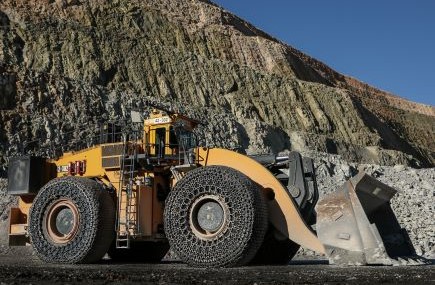
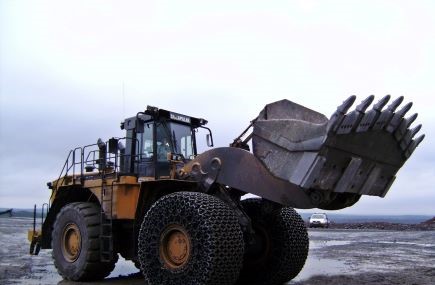
Tire chains for wheel loaders are made to improve your heavy duty vehicle’s traction and performance in the challenging conditions such as quarrying, slope and gravel, underground tunneling, and others you may encounter.  With these chains you will be able to fit the specific tire size and tread pattern of your wheel loader tires. Do you know what are the essential features and common types of tire chains for wheel loaders? If you are an operator, are you looking to improve your comfort while driving your wheel loader in challenging terrains? Here, you will find useful tools and information that will help you to improve your safety, comfort and productivity. 

Essential features of tires chains for wheel loaders

Tire chains for wheel loaders

Wheel loader tire chains construction

You can rest assured you are getting an excellent product made with heavy-duty materials such as hardened steel or alloy. These materials will provide your chains and tires more durability and longevity even in  quarrying, slope and gravel, underground tunneling, and other demanding environments. And the best of it… it can handle the weight and power of wheel loaders without compromising you and your vehicle’s performance!

Tire chains with the right fit for your wheel loader

It is essential that you select tire chains that are designed to fit the specific tire size and tread pattern of your wheel loader. You can find that manufacturers will offer you different sizes and configurations to ensure a proper and secure fit on your loader’s tires, maximizing traction and stability.

Increase you wheel loader’s traction

Wheel loader tire chains have an aggressive link pattern that will allow you to have an excellent grip on the challenging terrains you may face like quarries, slopes, and uneven surfaces. The design may include twist link chains, square link chains, or ladder chains, depending on the application and conditions you might need. But hey, no worries! We’ll dive into that topic in just a few paragraphs.

Get the best performance in every condition

Tire chains for wheel loaders are created to make your life easier. So, you can perform in specific conditions in mining such as quarrying, underground tunneling, and others. They are engineered to provide you optimal traction and control on multiple surfaces you drive like loose gravel, mud, or icy terrains.

Your safety comes first

While tire chains enhance your wheel loader’s traction and performance, it is important you use them in an appropriate way and in accordance with the safety guidelines. If you are an operator, you should be aware of the specific operating conditions where your tire chains are suitable for your heavy duty machine and we advise you to follow any regulations or restrictions imposed by your local authorities.

Your comfort is also very important

You can find that some tire chains for wheel loaders come with features that will help you to reduce the vibrations when you are moving and improve your comfort when you are driving onto those challenging terrains. When Rubber or polyurethane inserts between the chain links, it can help you to minimize noise and will give you a smoother ride.

Quick guide to the common types of tire chains for wheel loaders

When we talk about tire chains for wheel loaders, we can find that these are built to meet your specific traction needs. Also, you can use them according to the different operational conditions such as quarrying, slush, scrap, underground tunneling and others you may encounter. Let’s check them: 

Twist Link Chains

Twist link chains will provide you good overall traction and durability. Also named as ladder chains, are a popular option you could choose for your wheel loader. They have a ladder-like design with twisted links that will provide you excellent traction when you are facing multiple challenging terrains such as snow, mud, and others. 

Square Link Chains

Square link chains have square-shaped links that improve your loader tires grip and stability, if we compare it to twist link chains. These chains will give you an increased traction on icy surfaces and you are able to use it in extreme winter conditions or areas with frequent ice accumulation.

Diamond Studded Chains

Diamond studded chains are similar to twist link chains, but the difference is that these ones have metal studs or protrusions on each link. The studs dig into the surface, providing you a superior traction. 

V-Bar Chains

V-bar chains, also known as reinforced or studded chains, have additional metal bars or “V” shaped links welded onto the cross chains. These bars can help you to increase traction and provide you a superior grip in extremely slippery conditions. You can use V-bar chains when you require a maximum traction, such as steep inclines or icy surfaces.

Duo and Multi-Arm Chains 

Duo and multi-arm chains are designed to give the loader additional traction by covering a larger surface area of the tire. These chains have multiple arms or bars that span across the tread, offering you an increased grip and stability. You can use it on your heavy-duty applications or if you are operating in extreme conditions.

Finally, when you are  selecting tire chains for your wheel loader it is essential you make the choice taking into account different factors such as your work applications, the weather conditions, what type of terrains are facing, your loader’s load capacity and wheel tire sizes. 

Tire chains for wheel loaders

Prioritizing operator’s comfort when using tire chains for wheel loaders

We know that tire chains can add some vibrations and noise when driving wheel loaders. That is why your comfort is an important consideration for you as an operator.  When you get high quality tire protection chains for your wheel loader you can find certain features that can help you minimize these effects and make your life easier. 

Operator Training

You should know how to handle wheel loaders with tire chains. This knowledge can help you adapt your driving techniques with the goal of minimizing your discomfort and being able to maintain an optimal control.

Proper Fit and Tension

You must ensure that the tire chains are properly installed and tensioned on your wheel loader. If the tire chains are too loose it can create excessive vibrations and noise. If the tire chains that are too tight could cause unnecessary stress on your wheel loader’s tires and components.

Rubber or Polyurethane Inserts

They will provide you a more comfortable ride and decrease your fatigue. As mentioned previously, some tire chains have rubber or polyurethane inserts placed between the chain links. These inserts act as cushions, reduce vibrations and noise transmitted to the operator’s cab. 

Chain Link Design

Some tire chains for wheel loaders have characteristics that will help you to reduce vibrations and noise. For example, chains with twisted or spiral-shaped links can provide you a smoother ride compared to chains with straight links. 

Finally, we can tell you that the best way to find your comfort and take care of tires is to choose the right tire chains for your wheel loader by considering your work applications, weather conditions, your loader specifications and tire sizes. With this information you will increase your safety, productivity and comfort. We hope with this short guide you have found some useful tools to make your life easier as an operator.


Wheel loader chains are an excellent support to enhance traction and improve grip. These vehicles are designed to handle heavy loads and operate efficiently while working on challenging conditions and maximize your productivity. 

Here, we will discuss the most commonly used wheel loaders in mining and large-scale earthmoving operations like WA 1200, CAT 994, LT 2350, tire sizes for heavy-duty applications (70/70-57; 59/80-63), and how with this information you will be able to choose the right type of wheel loader chains for your machine tires. Is it standard link chains, studded chains, diamond pattern chains, square link chains or reinforced chains? Well, let’s check: 

Wheel loader chains

Most popular front end wheel loaders and ideal wheel loader chains 

A wheel loader, also known as a front loader, is a heavy piece of equipment used in construction, mining, and agriculture. Its purpose is to load materials like soil, gravel, and sand onto trucks. These machines are large and heavy, with tires that can be way bigger than you because the tires need to support a lot of weight and navigate difficult terrain. This is where wheel loader chains come in! They provide several benefits for these machines.

CAT 994

The CAT 994 is a large wheel loader. Its massive tires are designed to provide you with excellent traction on off-road terrains.  The design and composition of their tires are perfect to optimize your performance in the challenging environments you are facing, such as loose or uneven terrains. 

  • Operating Weight: : 230 tons
  • Bucket capacity: 45 cubic meters

The Komatsu WA1200

It is a heavy-duty wheel loader made by Komatsu. Like the CAT 994, it has specially designed tires that provide excellent traction and stability. These tires are made with specific rubber compounds and tread patterns to maximize your vehicle’s performance.

  • Operating Weight: : 200 tons
  • Bucket capacity: 35 cubic meters

The LT2350

Also called the L-2350, is a huge wheel loader made for tough jobs, like mining. It has big, strong tires designed to give you the best grip and performance when you are facing challenging conditions.

  • Operating Weight: : 250 tons
  • Bucket capacity: 40 cubic meters

CAT 992

This is a popular choice between operators because it is known for its high performance, durability, and versatility. 

  • Operating Weight: : 230 tons
  • Bucket capacity: 24 cubic meters

Volvo L350H 

A large wheel loader designed for demanding mining and quarrying operations. It combines power, productivity, and fuel efficiency. The L350H offers impressive loading capabilities. 

  • Operating Weight: Around 50 tons
  • Bucket capacity: Up to 9 cubic meter

These are some of the most used wheel loaders, but as you may know, there are way more front end wheel loader types designed for different operations and environments. Now, let’s talk about tires. 

Wheel loader chains

Find your ideal wheel loader chains with your vehicle’s tire sizes

Here you will find some commonly used tire sizes on large wheel loaders for heavy-duty applications. Here’s a breakdown of each size for you:

70/70-57

This tire size is commonly found on ultra-large wheel loaders. This tire size is wide and low-profile which will provide you a better stability and high load- bearing capacity. 

  • The first number, 70, represents the tire’s width in inches. 
  • The second number, 70, is the aspect ratio, which indicates that the tire’s section height is 70% of its width. 
  • The last number, 57, is the rim diameter in inches. 

59/80-63

This tire size is also used on large wheel loaders, mostly in mining. It will give you a good balance between your vehicle’s load and carrying capacity, traction, and flotation on the challenging surfaces you could be working on.

  • The first number, 59, represents the tire’s width in inches. 
  • The second number, 80, signifies the aspect ratio, where the section height is 80% of the width. 
  • The last number, 63, indicates the rim diameter in inches. 

Here you can check  other tire sizes that follow the standard industry format: 20.5R25, 23.5R25, 26.5R25, 29.5R25, and 35/65R33. These tire sizes are often found on large wheel loaders used in mining, quarrying, and heavy material handling operations. But remember and it’s important you check your wheel loader model, weight, load capacity, operation conditions, and terrain. Then, you will be able to find your ideal wheel loader chains…But, how?

What types of wheel loader chains could you use for your wheel loader tires? 

After identifying the most common wheel loader used in off road environments, tire sizes for these machines and we will check the most suitable wheel loader chains. However, It is important that you know what kind of environment conditions you are operating in. For example, do your operations include quarrying, open-pit mining, slag, scrap or underground tunneling? This will help you to choose the right wheel loader chain for you.

But well, that is something you need to check and then, with that info, let’s find the types of wheel loader chains could use depending on your operation conditions: 

Standard Link Chains

Consist of interlocking links that provide increased traction on slippery or uneven surfaces. They are relatively easy to install and remove and it is suitable for you to use in general applications.  

These chains are a popular choice for wheel loaders because they are equipped with metal studs or spikes that protrude from the chain links. For example: these chains help your CAT 994 to dig into the surface and give you extra grip when you are facing icy or slippery conditions.

Studded Chains

Studded chains have metal studs or spikes attached to the links, which provide even more aggressive traction.  This feature will help your vehicle to dig into the surface and offer you enhanced grip on ice, snow or slippery conditions.

Reinforced Chains

These chains have thicker cross chains or extra side chains.  It will provide your wheel loader increased strength and durability when you are working on heavy duties and challenging terrains.They are well-suited for demanding environments where longevity and resilience are essential.

Square Link Chains

These chains have square-shaped links that give your vehicle enhanced traction and durability. These chains offer you a good grip on the following challenging terrains: snow, ice, mud, and loose gravel. Square link chains are known for their resistance to wear and tear, making them suitable when you are doing heavy-duty applications.

Diamond Pattern Chains

A unique design with interconnected diamond-shaped links. This design offers you an improved grip and lateral stability. Diamond pattern chains will help you on muddy, sandy, or loose terrain. It will provide your vehicle better traction and reduce the probability of slippage.

Please remember to follow your manufacturer’s guidelines and recommendations for installation, maintenance, and safe usage.  In that way you will avoid damage to the tires of your machine or the wheel loader. 

Here you have found out that wheel loader chains are essential if you are looking to improve traction and grip in your heavy-duty wheel loader. You can find different wheel loader models, tire sizes and how to get the ideal wheel loader chain depending on your own vehicle’s characteristics.  Wheel loader chains are designed to optimize your machine performance in every challenging terrain you face. 

Protection chains, also known as safety chains or security chains, are devices used to enhance the safety and security of various equipment, particularly trailers, towing systems, and heavy machinery. Protection chains are typically made of strong, durable materials such as steel or high-strength alloys.  Here, we will explore the ABCs of protection chains, specifically protection chains for wheeled heavy machinery and how these chains have got your back. 

The ABCs of protection chains: Exploring different types you can find

The primary purpose of a protection chain is to prevent accidents or damage that could occur. They are designed to withstand heavy loads and resist damage caused by tension, abrasion, or impacts. The chains are usually equipped with hooks or couplings.

Mining Equipment Chains: 

Mining equipment chains are specialized chains used in the mining industry to enhance the safety and stability of wheeled heavy machinery. These chains are designed to prevent tire detachment or failure in mining vehicles, such as haul trucks, wheel loaders, and bulldozers. They are built with high-strength materials to withstand the extreme forces and conditions encountered in mining operations.

Snow Chains:

Snow chains, also known as tire chains, are used in snowy and icy conditions to improve traction and your vehicle control. They consist of chains that are wrapped around the tires to provide enhanced grip on slippery surfaces. You can use snow chains in areas with heavy snowfall, such as mountainous regions or during winter driving conditions.

Lifting Chains:

Lifting chains, also referred to as chain slings, are used in material handling and lifting operations. They are designed to lift and secure heavy loads, providing a strong and reliable connection between the load and the lifting equipment. 

Logging Chains:

Logging chains are heavy-duty chains specifically designed for the logging industry. They are used to secure logs and prevent them from rolling or shifting during transport.

Trailer Safety Chains:

These chains are used for towing applications, particularly for trailers and recreational vehicles. They are designed to prevent trailer detachment in case the primary hitch fails or becomes disconnected from the towing vehicle. Trailer safety chains typically have hooks or couplings on both ends for secure attachment.

By incorporating protection chains, you can significantly reduce the risk of accidents, property damage, and injuries. They are a valuable feature for your safety, provide you peace of mind and add security while towing or operating heavy machinery.

Protection chains for wheeled heavy machinery 

These chains are typically used on equipment such as haul trucks, wheel loaders, bulldozers, and other large mining vehicles to provide an additional layer of protection against tire detachment or failure.

Usually, when using off-the-road tires (OTR) in challenging environments like mining, fatigue damage tends to occur in your tires. Protection chains can provide you an extra layer of security, particularly in rugged mining terrains where equipment is subjected to high loads, rough surfaces, and potentially hazardous conditions.

Key aspects of protection chains for wheeled heavy machinery in mining

Purpose:  The primary purpose of these chains is to prevent catastrophic accidents and minimize the potential risks associated with tire detachment or blowouts on mining equipment.  In the event of a tire failure, these protection chains will help to retain the tire on the wheel, preventing it from dislodging and causing you a loss of control or damage.

Construction: Protection chains for mining machinery are engineered to be durable, resistant to wear and tear, and capable of withstanding high tension. They are designed to withstand the extreme forces encountered in mining operations, including heavy loads, rough terrain, and abrasive conditions.  

Attachment: The chains are securely fastened around the circumference of the tire and attached to the wheel rim. They are typically equipped with tensioning devices, such as tensioners or ratchets, to ensure a tight and secure fit.

Compatibility: You can find protection chains in different sizes and configurations to accommodate your tire dimensions and your vehicle type. It is essential you select chains that are compatible with your specific tire size and your vehicle model to ensure proper fitment and functionality.

Maintenance and Inspection: You should do regular maintenance and inspection of your protection chains to maintain optimal chain performance and prolong their service life. Mining companies typically have maintenance protocols in place to monitor and replace chains as needed, considering factors such as wear, damage, or fatigue. Please check the protocols in your workplace! 

Protection chains provide you an extra layer of security, particularly in rugged mining terrains where equipment is subjected to high loads, rough surfaces, and potentially hazardous conditions. By employing these chains, mining companies can mitigate the risks associated with tire failures and enhance the safety of their operations.

How protection chains have got your back? Let’s take a closer look

What if your tire fails but you are using protection chains? In the event of a tire failure, such as a blowout or sudden deflation, protection chains play a critical role in retaining the tire on your vehicle’s wheel, preventing it from completely dislodging. This could help you to mitigate the potential consequences that can arise from tire detachment, including loss of control and damage. Here’s a more detailed explanation of how protection chains assist in this regard:

Containment of Tire: When a tire failure occurs, the protection chains tightly encircle the tire’s circumference. The chains create a secure barrier around the tire, acting as a secondary support system to prevent it from detaching or coming completely off the wheel.

Chain Engagement: The chains interlock with the tire, exerting tension and pressure on its surface. This engagement helps to hold the tire in place and restrict its movement, even during sudden deflation or significant damage.

Restricting Tire Movement: The chains limit the mobility of the damaged tire, preventing it from bouncing, rolling, or shifting excessively. 

 Reduction of Secondary Hazards: When a tire detaches or dislodges, it can pose serious risks, such as striking other equipment, structures, or personnel. The utilization of protection chains minimizes the likelihood of these secondary hazards by effectively retaining the tire on the wheel, preventing it from becoming a loose and uncontrolled object.

By retaining the tire on the wheel, protection chains allow the mining vehicle operator to maintain a higher level of control over their equipment, facilitating safer operation even in the event of a tire failure. This control can be crucial in mitigating the risk of accidents, minimizing damage to the vehicle, surrounding infrastructure, and ensuring the safety of the operators and other personnel.

Incorporating protection chains for your wheeled heavy machinery is a proactive measure that enhances your safety and provides you peace of mind.

 Protection chains are the heroes in the mining industry. These chains provide an extra layer of safety and security for your wheeled heavy machinery. It is built with strength and resilience, playing a crucial role in preventing tire detachment or failure, safeguarding you against accidents and damage. You can find various types available, such as mining equipment chains and snow chains, protection chains that offer specialized features for different applications.

Tire protection chains are devices that are placed around the tires of heavy equipment to provide additional traction and protection. By understanding the benefits, features, ideal sizes and compatibility considerations of tire protection chains with haul trucks, wheel loaders, graders, and utility vehicles, you can make informed decisions when selecting the appropriate chains for your vehicle and your specific operating conditions.  Here you will find a quick and useful guide to find the right tire protection chain for you and understand the many things you will win if you use it when working in off-road environments.   

Benefits when using tire protection chains

Tire Protection Chains are a perfect ally when we are facing challenging terrains and adverse weather conditions. It’s essential to know that the use of tire protection chains may vary depending on the specific mining operations like Quarrying, Open Pit and Underground/tunneling. 

Here you will be able to find the several benefits if you use tire protection chains in mining and off road environments: 

Enhanced Traction: TPC will help you to prevent slippage and improve maneuverability. In mining environments where the terrain may be uneven, slippery, or challenging, tire protection chains improve traction and grip.  This will allow your vehicle to operate more effectively in difficult conditions. 

Increase your tire’s life: Extra layer of protection to the tire treads. It will minimize the possibility of wear and tear of your tires caused by abrasive surfaces, sharp rocks, or rough terrains.

 By reducing tire damage with the use of tire protection chains, you can extend the lifespan of your tires and save money by spending less money on maintenance costs.

Improve your safety: The enhanced traction provided by tire protection chains can contribute to improving your safety in mining operations. It reduces the risk of vehicles sliding or losing control, especially in steep or icy conditions. You will reduce the likelihood of accidents and injuries.

It’s worth noting that proper installation, regular maintenance, and adherence to manufacturer guidelines are essential to ensure the effective and safe use of your tire protection chains in mining and off-road environments.

tire protection chains

Features of tire protection chains

Additionally to the benefits mentioned before there are some key features that make tire protection chains a valuable accessory for your tires:

Durability: Tire protection chains are made from durable materials such as hardened steel or alloy, ensuring they can withstand the demanding environments and resist wear and tear of your tires. These chains are designed to withstand harsh mining and off-road conditions. 

Easy Installation and Removal: Tire protection chains are designed to be easy to install and remove, allowing for quick adaptation to changing conditions. This feature is particularly beneficial in environments where terrain conditions vary frequently, enabling you to switch between chain usage as needed.

Versatility: You can use tire protection chains with various types of off-road vehicles and equipment, including mining trucks, loaders, bulldozers, and forestry machines. They are compatible! These devices can be used in a wide range of mining and off-road applications.

Now, let’s check the most used heavy equipments in mining and the benefits of using tire protection chains: 

And talking about mining trucks, wheel loaders, bulldozers, and forestry machines, it is important to know how we can use tire protection chains depending on the various types of vehicles. And, how useful can become a tire protection chain based on the specific task and terrains in off-road environments. 

Haul Trucks

Haul trucks are large vehicles used to transport heavy loads of materials within mining sites. These trucks often operate on unpaved, uneven surfaces and encounter challenging conditions.  If you use this type of vehicle, tire protection chains can improve the traction of your haul truck tires, especially if you are driving on loose or slippery terrain. This will help you to enhance stability, prevent slippage, and improve control while carrying heavy loads.

Wheel Loaders

These versatile machines are equipped with a front-mounted bucket and are used for various tasks such as loading materials into trucks, stockpiling, and transporting materials within the mining site. They need good traction and maneuverability to operate efficiently. Tire chains can enhance the grip of your loader tires, allowing them to handle loose materials, climb steep inclines, and navigate through challenging terrain. 

Graders

Graders are utilized for grading and leveling surfaces in mining operations. They require excellent traction to achieve precise grading results. If you use this type of vehicle, tire chains can enhance your grader’s traction, allowing your machine to maintain stability and control on loose or icy surfaces. Also, I will improve the accuracy of grading operations. 

Utility Vehicles such as trucks, SUVs, and all-terrain vehicles (ATVs)

These machines are commonly used in mining sites for transportation, equipment maintenance, and personnel movement.  Tire chains can be beneficial for utility vehicles when you are navigating through difficult terrain or during extreme weather conditions. They enhance traction and improve your vehicle’s ability to handle slippery or uneven surfaces, ensuring safe and efficient transportation.

As with any other vehicle type, we advise you to consider factors such as your vehicle specifications, tire size, manufacturer recommendations, and the specific conditions of the mining site when you are about to select and use tire protection chains. 

Tire size and compatibility with tire protection chains

Here also you can find a guide to learn the importance of tire size and considerations for tire protection chains across various vehicles commonly used in mining, including haul trucks, wheel loaders, graders, and utility vehicles. If you choose the right chain you will have an optimal performance. 

Haul trucks: Haul trucks typically have large tires with specific size designations such as 27.00R49 or 40.00R57. Make sure that the tire chains for these vehicles are designed to fit the specific tire size and load capacity of your haul truck. Please select chains that are suitable for heavy-duty applications.

Wheel Loaders: They come in various sizes, and the tire size can vary depending on the model and manufacturer. Common tire sizes for loaders used in mining include 23.5R25, 26.5R25, and 29.5R25. When choosing you should always consider the specific tire size, load capacity. 

Graders: Graders commonly use tires with sizes like 14.00R24, 17.5R25, or 20.5R25. When selecting tire protection chains for your grader you should check the specific tire size, load capacity, and your grader’s working conditions.

Utility Vehicles such as trucks, SUVs, and all-terrain vehicles (ATVs): They have varying tire sizes depending on the vehicle model. Common tire sizes for these vehicles include 31×10.50R15, LT265/70R17, or 25×10-12 (ATV tires). Please match the tire size and the specific requirements of the mining operation with the tire protection chains.  

Now, with this guide and your own considerations about your vehicle load capacity, tire size and working conditions you will be able to find the right tire protection chains for you. Here are a few examples and you can know more on our blogs. 

Tire protection chains
Tire protection chains x20
Tire protection chains X12

Now it is time to make a decision!  You have found the perfect information and tools to go on and select the best tire protection chain for your vehicle.  By doing so you will be well prepared to conquer those challenging roads and achieve optimal performance in your mining operations. Remember… you will win a lot by using a high-quality tire protection chain like being safe, enhancing productivity and saving money. 

Tyre protection chains serve as indispensable accessories when facing challenging environments with demanding road conditions.  Whether used in mining, quarrying, or off-road environments, tyre protection chains will help you to prevent accidents, save your money by protecting your tires from damage, and increase your productivity and your safety. These chains will allow you to conquer those challenging roads with ease! Here, you will be able to understand more about Tyre protection chains, how these tyre chains work, what to look for in quality tyre chains, and their applications in various industries.

What is a tyre protection chain? 

A tyre protection chain is a valuable accessory designed to fit around the tyre tread and consist of a series of metal chains or cables.  The chains are usually made from durable steel or alloy materials to withstand the rigors of driving on rough terrain. This device is designed to be flexible so they can be adapted to any changes in the tire’s shape. They also come with amazing self-cleaning properties, which means the mesh of the chains won’t get filled or blocked. These features will help you to maintain optimal control and grip on the challenging roads you will face. 

What tyre protection chains are used for? 

You can use Tyre protection chains to improve traction and grip on vehicle tires in challenging road conditions like mining. This improved traction will help your vehicle maintain control and stability, reducing the risk of accidents or getting stuck. When it comes to off-road tire care you will be surprised and maybe you already have experienced the many tools required to tackle tire life challenges.

Usually, when you use heavy machinery for mining your tires are vulnerable, easily damaged and can be expensive to replace because of the sharp, edged rock, muddy and slippery surfaces . By using tire protection chains on the tires  you can save money, increase productivity and safety. So you can save your tires, time and life!

How the tyre protection chains work? 

LASZIRH’s high-quality tyre protection chains are specifically designed for heavy trucks operating in off-road environments such as mining, quarrying, and construction. 

The tyre protection chains are installed onto the tires, forming a network of metal chains that completely cover the tread area. 

As the vehicle moves, the tyre protection chains come into contact with the ground surface. The metal chains are equipped with protrusions or studs that penetrate the road or terrain, effectively increasing the friction between the tire and the ground.

How you should know the best quality tyre protection chains?

The best way to know is you are getting the best quality tyre protection chains is to consider a few key factors. Firstly, look for chains made from durable materials such as steel or alloy, as these provide strength and longevity. Next, consider the design of the chains.

Also, you should check the durability and if the chains have features like protrusions or studs that enhance traction.  Choose chains that are resistant to wear, corrosion, and extreme conditions, ensuring they can withstand challenging environments. And… an extra tip! check if the chains have undergone testing and certification to meet industry standards.

LAS ZIRH Tyre Chains are manufactured from high wear-resistant alloyed steel manufactured in the EU. The steel is certified, vacuumed, and undergoes ultrasonic control. Each link is forged and hardened to ensure strength. Electronic induction heating equalizes link temperature and molds are CNC-designed for precision.

To create robust connections, the chain rings are welded using an automatic flash butt welding system, without the need for welding wire or electrodes. These welds undergo rigorous testing with a 40-tonne pulling device to ensure their strength and reliability. Health, safety, and environmentally friendly production are prioritized by Las Zırh.

Tyre protection chains for challenging environments  

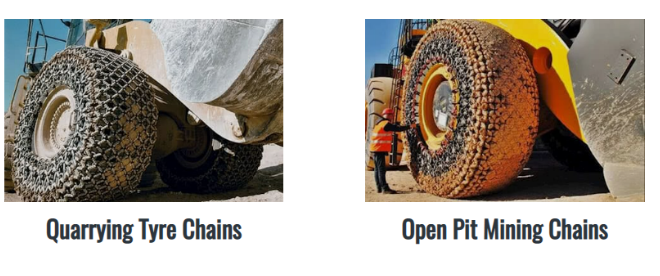
Tyre protection chains are specifically designed to excel in a variety of challenging environments, including quarrying, open-pit mining, slag and scrap operations, as well as underground tunneling.

It’s important to understand the specific applications in each environment to ensure the best fit and performance. There are some general differences in the design, traction enhancement, wear resistance, environmental considerations, installation and maintenance. For example: 

  • Design: Quarrying chains may be designed to withstand abrasive materials, while open pit chains may have added strength and durability to handle rough terrains and heavy loads.
  • Traction enhancement: Quarrying chains may have specific features to improve grip on rocky or uneven terrains, while open pit chains might focus on providing better traction on loose or sandy surfaces.
  • Wear resistance: In slag and scrap operations where there can be high heat or sharp objects, chains may be designed to withstand extreme temperatures and resist damage from abrasive materials.
  • Environmental considerations: Depending on the environment, such as underground tunneling, the chains may require specific characteristics to minimize noise, vibrations, and potential damage to the tunnel walls or sensitive surroundings.
  • Installation and Maintenance: Some environments may require easier installation or quick removal for maintenance purposes, while others may have more complex installation requirements due to the nature of the operation.
TYRE PROTECTION CHAINS

Other Tyre Protection Chains applications

  • Transportation of Heavy Loads: Trucks and vehicles transporting heavy loads, such as logging trucks or heavy equipment transporters, often use tyre chain protection to enhance tire grip and stability. This allows them to safely transport heavy loads over uneven or slippery surfaces.
  • Military Applications: In military operations, tyre chain protection is utilized to improve the mobility of military vehicles in difficult terrains, including off-road environments.
  • Winter Driving: In snowy and icy conditions, tyre chain protection is often employed to increase tire grip and prevent slippage. This is particularly important for vehicles traveling on steep slopes, icy roads, or mountainous regions where winter conditions can be treacherous.
  • Emergency and Rescue Vehicles: Tyre chain protection is crucial for emergency and rescue vehicles that need to navigate through challenging terrains during critical situations

In conclusion, tyre protection chains are a valuable accessory for improving traction and grip in challenging conditions. By using the appropriate chains and understanding the specific requirements based on the environment and quality, you can protect your tires from damage, saving money and enhancing productivity and safety.